Lost Birds
One of my favorite websites to check is “Lost Birds”. What is a lost bird? A lost species is one not confirmed alive by photographic, audio, or genetic information for over 10 years in the wild and has no captive population under human care.” Founded in 2021, the Search for Lost Birds is a global partnership between the American Bird Conservancy and BirdLife International, striving to understand and promote species of birds that are currently lost and reporting on when and if they are found. The current list stands at 120 birds, that has recently been reduced by three:
The montane forests of Buru, Indonesia, sit behind a natural barricade of jagged limestone, rattan thorns, and biting insects. Last fall, local climbers with the Wanadri Mountain and Jungle Explorer Association mapped a new route to the island’s highest peak, a 2700-meter summit long considered unreachable. In April, another team followed in their footsteps, with an additional goal in mind.
Led by Indonesian mountaineering group Kanai Buru and expedition leader Handoko, four travelers ventured to the highlands of Mount Kapalatmada. Near the summit they found Blue‑fronted Lorikeets — an endemic species documented only once in the last hundred years.
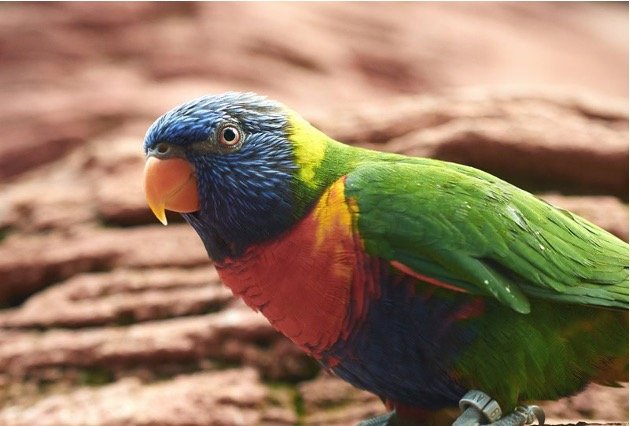
The Blue‑fronted Lorikeet was first described from seven specimens collected in the 1920s. Soon after, the bird disappeared from the scientific record. Despite extensive surveys in the lowland and mid-elevation forests tied to the original specimens, the parrot went undetected for decades, The IUCN Red List listed the lorikeet as Critically Endangered in 2000, interpreting its long silence as evidence of a small, possibly declining population. Then in 2024, the lorikeet was reclassified as Data Deficient, an admission that with so little knowledge of the lorikeet’s population size, trends, or distribution, it was impossible to accurately assess its extinction risk.
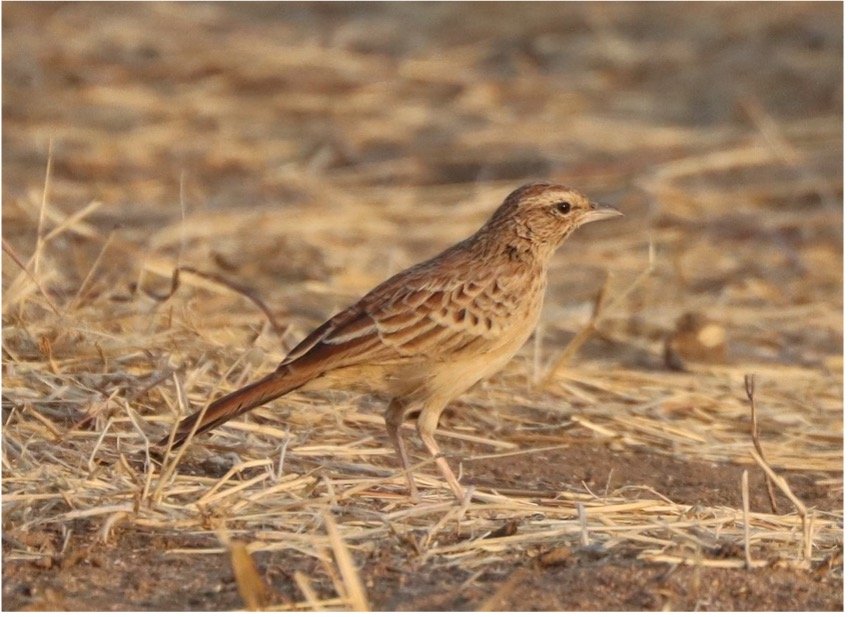
There had been no documented records of Rusty Lark – a very poorly-known lark found in arid savannas of Niger, Chad, and Sudan – since 1931. That was when specimens were collected in what is now Niger.
The only other hints come from research papers from the late 1960s in eastern Chad, where J Salvan recorded many examples, and from the work by G Nikolaus in his Distribution Atlas of Sudan’s Birds (1987). These works didn’t provide the definitive documentation needed to confirm it was indeed Rusty Lark that was seen.
French duo Pierre Defos du Rau and Julien Birard, of the Office Francais de la Biodiversite, regularly travel to Chad and other African countries to study waterbirds. On their latest trip, they were led by Idriss Dapsia, a Chadian working for the Direction de la Faune des Aires Protegees of Chad. The team stopped over in Guera province after 10 days spent ringing ducks at Lake Fitri and, before heading to Zakouma National Park to census waterbirds, to search for Kordofan Rufous Sparrow. Julien noticed a pair of Kordofan Sparrows at very short range. Upon retrieving a camera and microphone from their vehicle, the sparrows had disappeared, but continued searching revealed the presence of a distinctively different lark, less than 15 meters from the exact spot where the sparrows had been.
After considerable consideration, photo comparisons, and excluding other lark species byprocess of elimination, they had concluded it must be a Rusty Lark. Their initial identification was confirmed by Dr Paul Donald, a Senior Scientist at The Search for Lost Birds.
Sulu Cuckooshrike
On November 15, 2025, Shareef Khaddafi Hairal, a surveyor for the Ministry of Environment, Natural Resources, and Energy in the Philippines, had set up camp to search for one of the world’s rarest birds, the Sulu Hornbill, a Critically Endangered, range-restricted species whose population is estimated at fewer than 20 pairs. The Sulu Hornbill appeared, along with other avifauna, from woodpeckers to imperial-pigeons,” Then, another bird arrived and was quickly photographed.
The sleek, sturdy individual was a uniform gray with darker wingtips and tail feathers. Unsure of the species, the team returned to Tawi-Tawi’s capital, Bongao. Hairal sent his photos to Philippine bird expert Desmond Allen, who identified the species, as the Sulu Cuckooshrike was last documented by Allen himself in 2008. Endemic to the Sulu Archipelago’s lowland and foothill forests, the species had been lost to science for almost two decades.
Always love to read these stories. Too much of the news on birds is in the other direction.