President’s Corner: May-June 2026
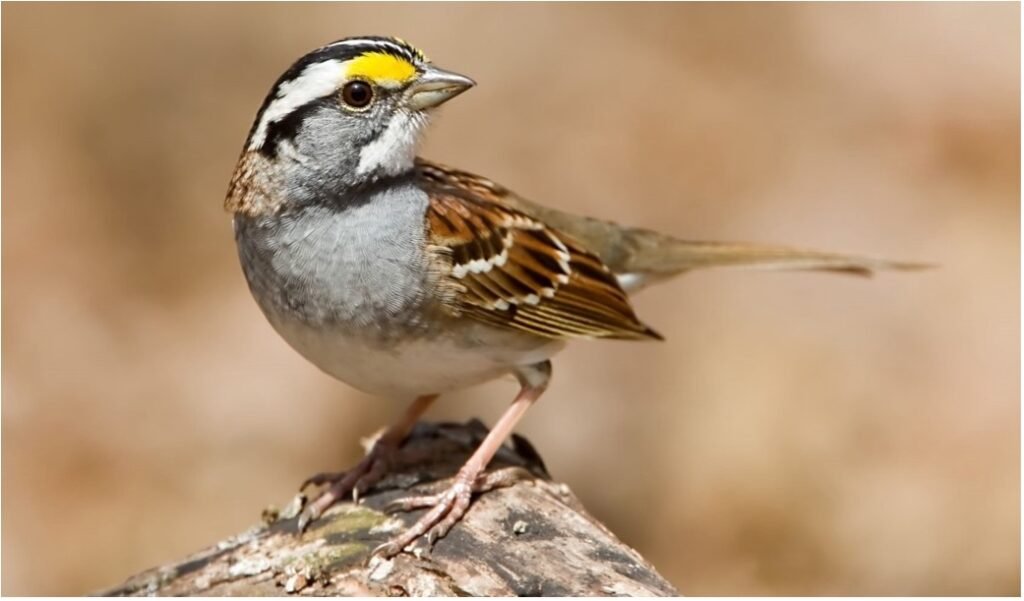
I was bird banding out at Coyote Creek last week, and we caught a great bird, a White-throated Sparrow. One of the other banders asked what stripe it was. That was something new to me, so I looked it up and learned a great story. The White-throated Sparrow shows one of the most interesting plumage variations among North American birds—its head stripes come in two distinct color morphs:
1. White-striped morph
- Bold black-and-white crown stripes (this is the morph we netted)
- Bright, crisp contrast
- Often shows bright yellow lores (the spot between the eye and bill)
- Tends to be more aggressive and territorial
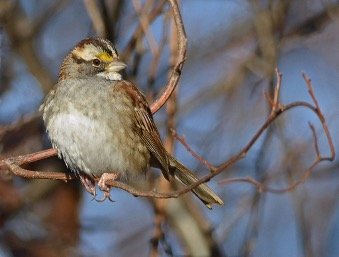
2. Tan-striped morph
- Softer brown-and-tan crown stripes
- Overall more muted appearance
- Also has yellow lores, but the head pattern looks less striking
- Typically less aggressive, exhibits more parental behavior
- Why this matters
These stripe differences aren’t just cosmetic—they’re tied to genetics and behavior:
- White-striped birds usually pair with tan-striped birds
- The pairing helps balance aggression and parental care
- White-striped birds: more aggressive, more likely to sing and defend territory
- Tan-striped birds: less aggressive, more focused on nesting and care
So, the stripes help birds quickly assess each other—who’s likely to fight and defend the nest, who’s likely to invest in raising young.
And this isn’t based on the sex of the bird; you can’t sex them based on stripe color. Males are just as likely to be tan striped or white striped. The same goes for females.
3. Genetic basis (a “supergene”)
The stripe difference is controlled by a large block of linked genes (often called a supergene):
- It bundles together traits like plumage color, hormone levels, and behavior
- Because it’s inherited as a unit, the color morph reliably signals behavior
Bottom line
The stripes function as a built-in social ID system—they advertise behavior, guide mate choice, and help organize roles within pairs. It’s one of the clearest examples in birds of plumage tied directly to personality and genetics. I am just amazed by how much there is to learn about the birds around us.
Now on to the want ads. We have two important positions that need filling.
First is Program Chair. This is the person who organizes the great programs for our membership meetings. Don’t be intimidated—this job is pretty straightforward. First, you need to find speakers. This is easier than it seems. You look to see what other chapters are doing; you may see a great speaker at a festival; or members may recommend a speaker to you. It is a great way to learn what other chapters are doing. Then, you get the speaker’s contact info, share that with our Treasurer, and recruit them. Most speakers are eager. You will need to get some background info and write up a brief article for the Kite Call. Then, stay in touch with them and make sure they have the info to access for a Zoom invite for the general meeting. All speakers are very familiar with this process. Then, if you can, introduce the speaker at the meeting. There are several of us who have done this and you will get tons of help.
Second, we need a Rare and Interesting Birds Editor for the Kite Call. If you look at the past few Kite Calls, you may see an article on rare and interesting birds that have occurred in our area. This is a fun one. You can review the various rare bird alerts in our area, consult with our Field Trip chair, and summarize what cool birds have been in our area over the past month or so, and then provide an article for the Kite Call. It is a great way to keep up on birding in the East Bay. Again, there are lot of folks who will help get you started on this task.
If either of these roles appeal to you and you want to learn more, contact me at Pr*******@***********on.org or talk to any of our board members.